Taking unused potential to create a powerful prioritization system.
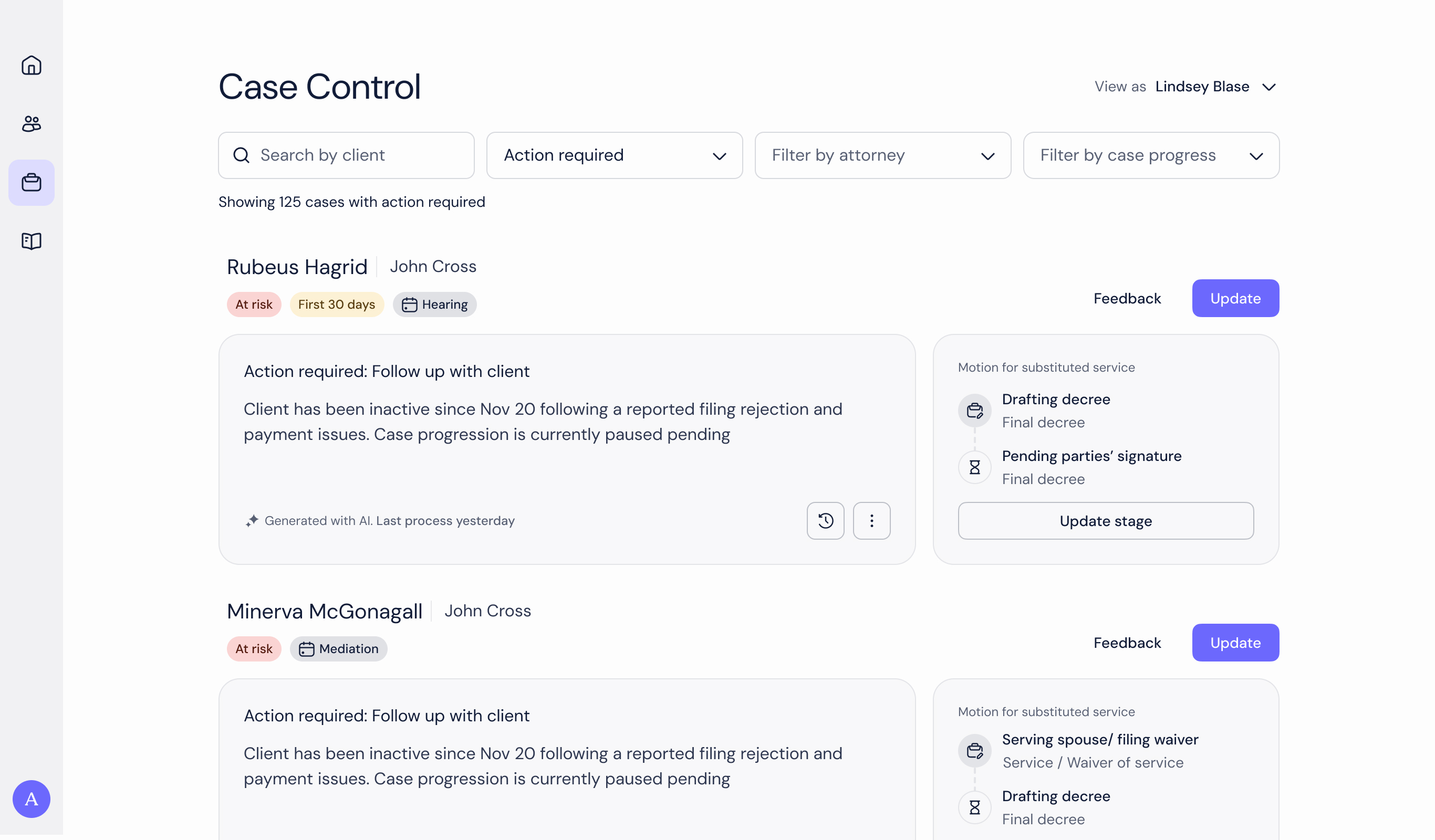
Case Control began inside Flare's AI team. Their mission was ambitious, and they built something powerful, a system that could pull together everything known about a case. Their first target was a real pain, the hours paralegals spent prepping for the biweekly meeting with attorneys.
What the system could potentially provide was so much bigger than that one use case. The opportunity here was to take that potential and shape it around how paralegals actually work.
Paralegals are what make Autopilot work. They handle everything around a case that isn't legal, so attorneys can focus only on the law and take on more clients. But they were doing it across spreadsheets, email, and a handful of tools, with no way to see what needed attention or what to do next. Work was reactive. Cases slowed down, and some got missed or stuck.
The goal was to give them one place that turned the AI output into a clear next step.
And by learning how they actually work to improve over time and move toward doing the work itself.
By shifting that work to paralegals the team scaled to 30% over five months (637 to 1,124).
Both moves hit the same business goals: Monthly case closings rose ~10%, and because a silent, stuck case is a top driver of churn, client disengagement fell, cutting the refunds paid on cold cases. Keeping cases moving also opened room to sell additional services.
Research worked on two levels, interviews with paralegals across the team to learn deeply how they work, and hard data (stalled cases, moving milestones, closing services...).
After the first release, we met with paralegals twice a week to review real cases, check the AI's recommendations, and tune the prompt with concrete examples, and held weekly sessions with the operations team to surface deeper and management-level needs.
Our system could surface everything about a case. The design did the opposite, it focused on what deserves attention right now. One next step per card, everything else out of the way, and the queue ranked by the signals that predict where attention is needed, churn risk, urgency, court dates, client sentiment, so the top of the list is what to do next.
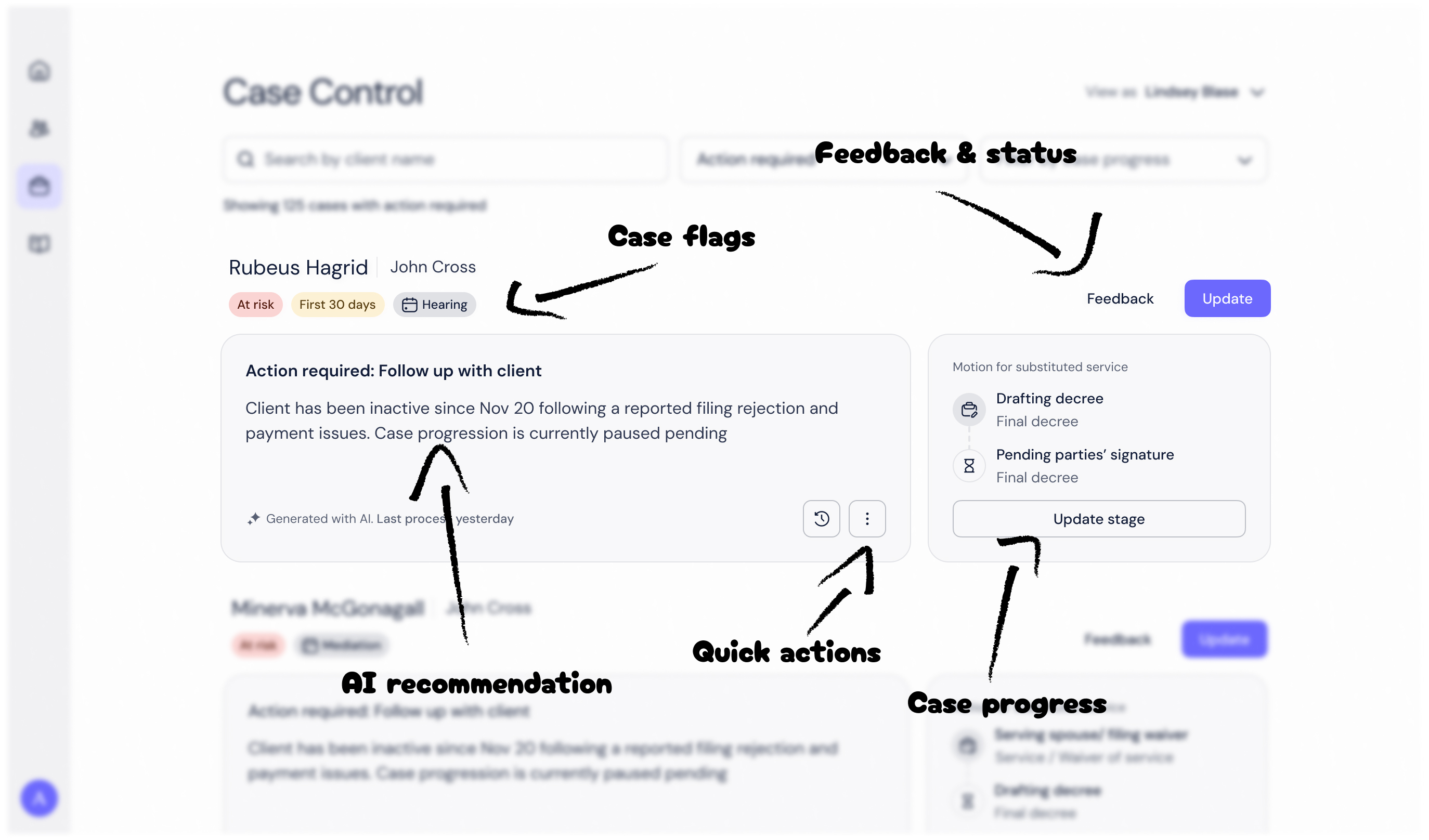
We surfaced the main actions right on the card, so the paralegal saves time, moves between tools less, and finds it easy to act now instead of later.
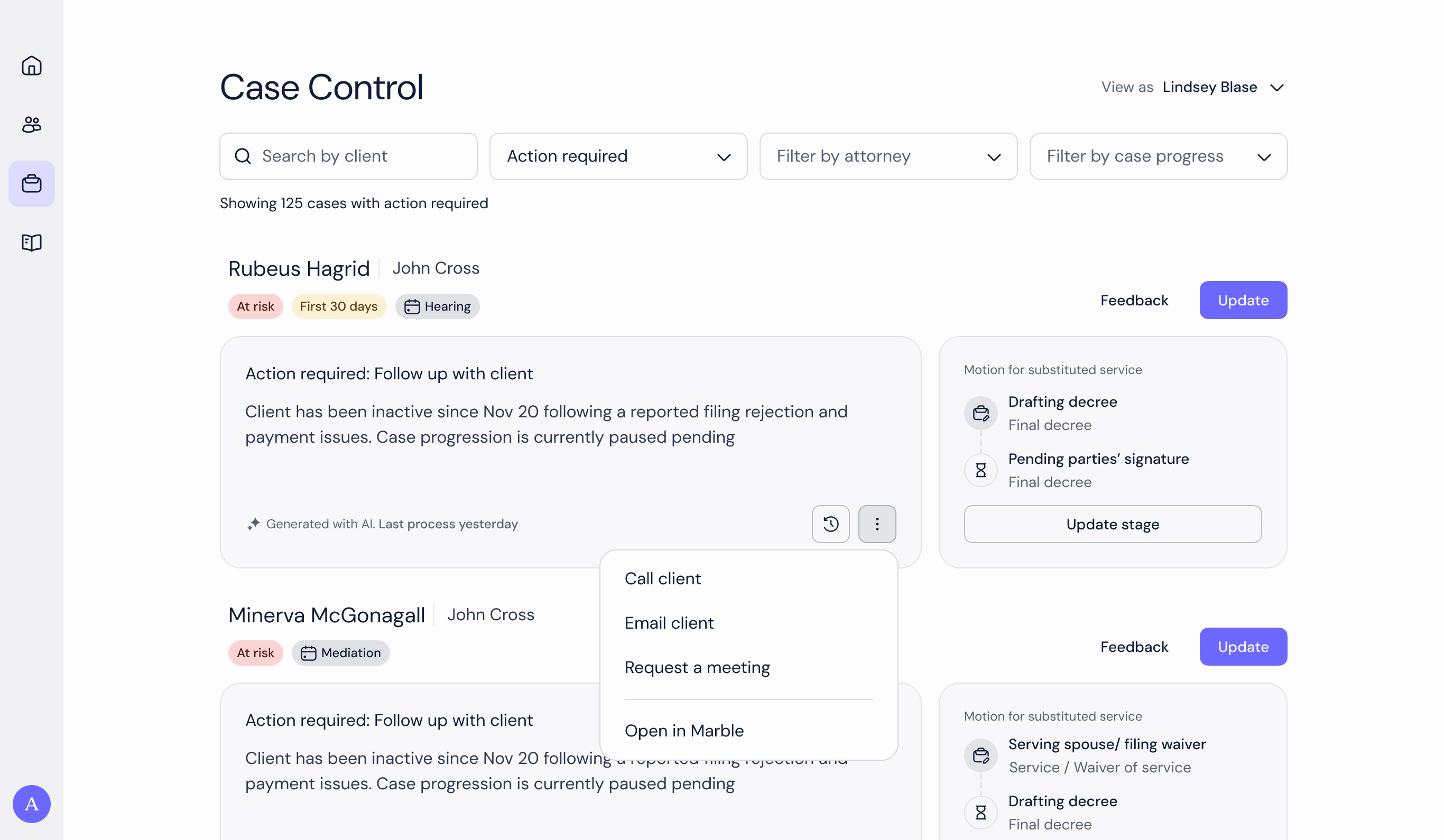
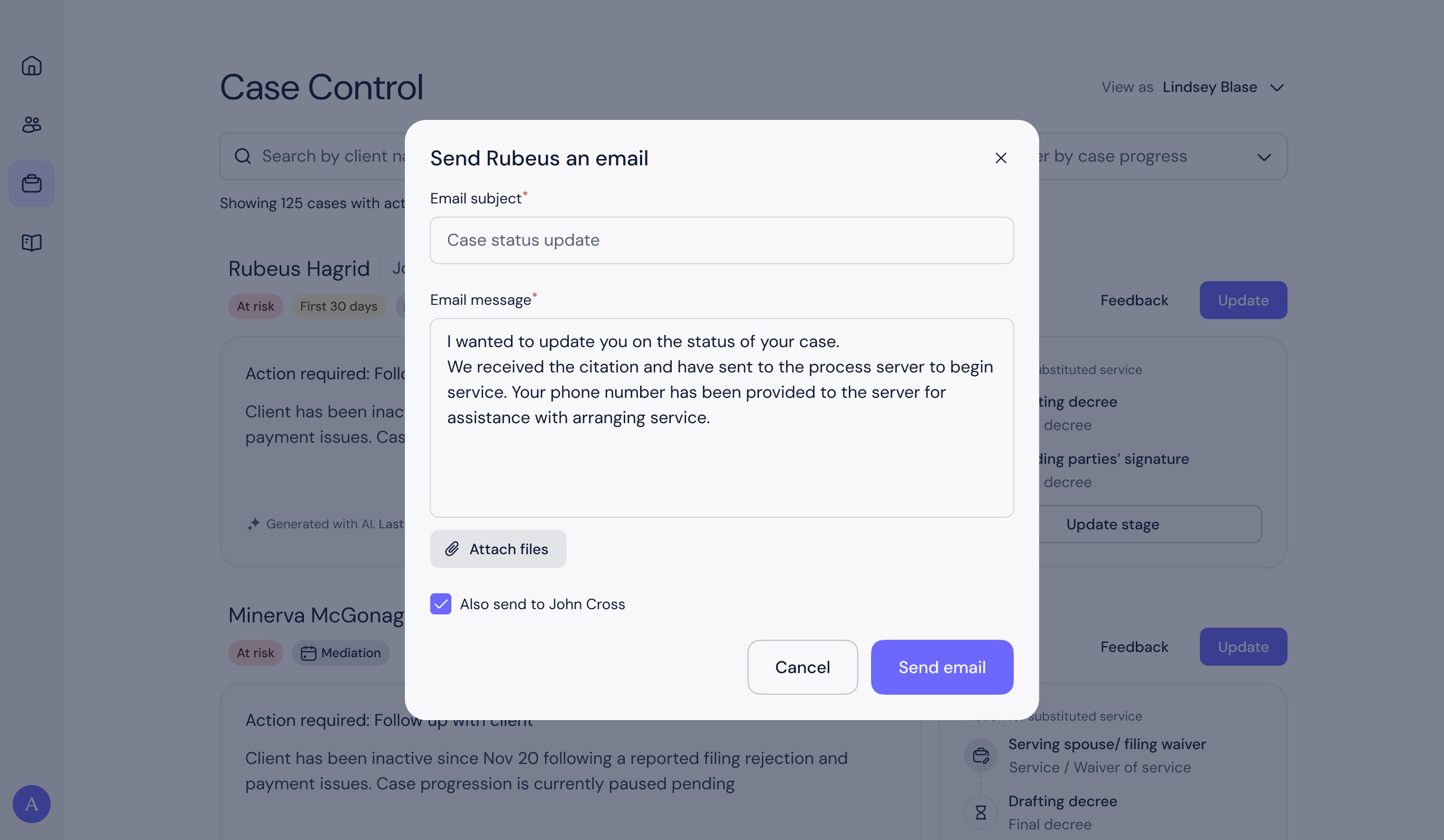
Client emails, AI-drafted and editable, attorney kept in the loop.
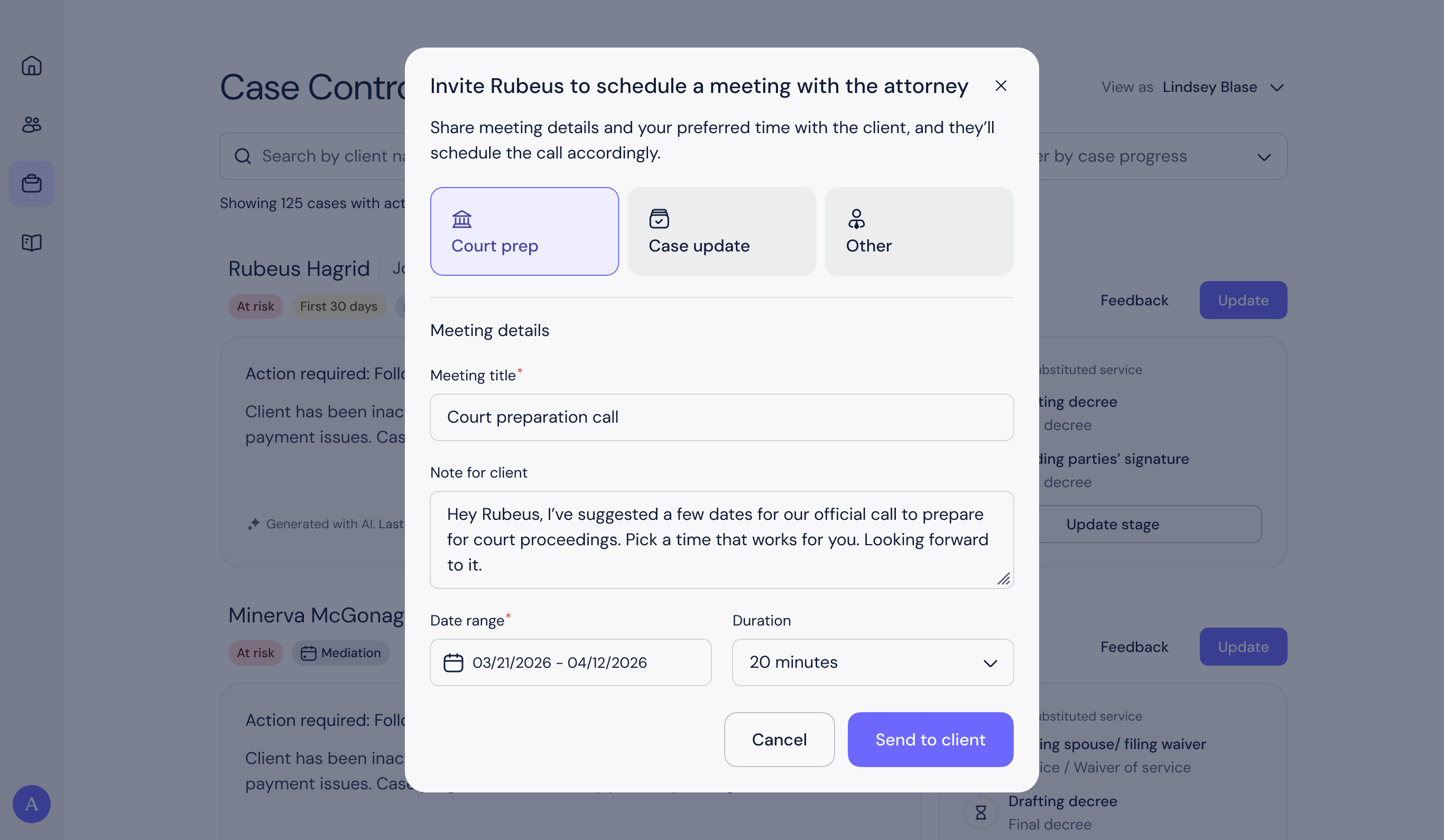
Meeting requests come pre-filled and ready to send.
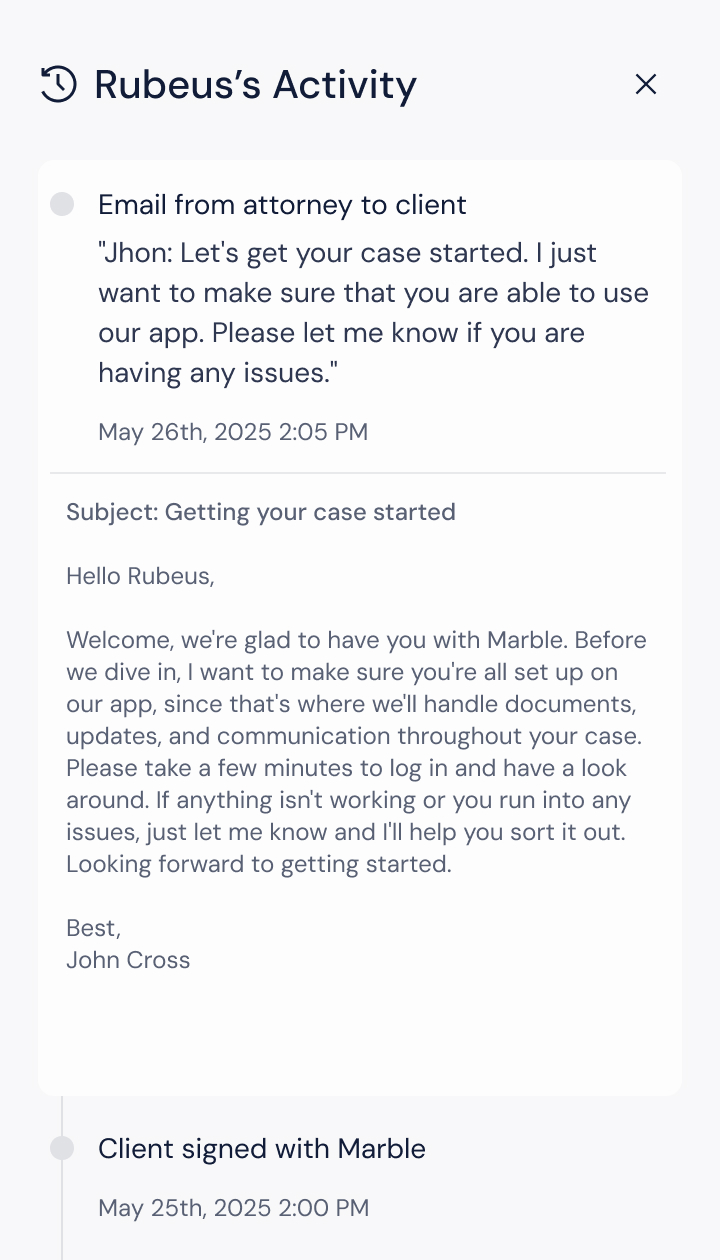
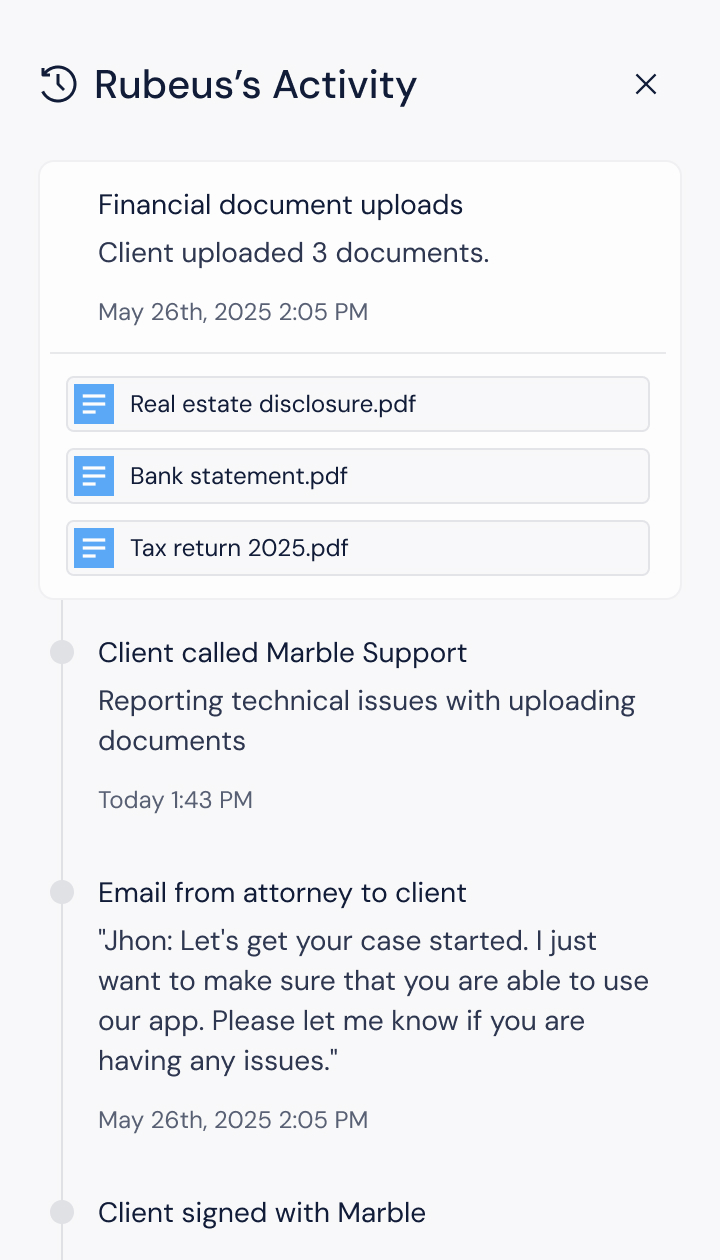
The full case history, summarized in one place, so the paralegal has the whole story before acting, no digging through other systems.
With an AI system, the thing you protect most is continuous learning. We launched at ~87% accuracy, so every day the paralegal uses Case Control, they're also feeding the engine. Update and feedback are the training loop.
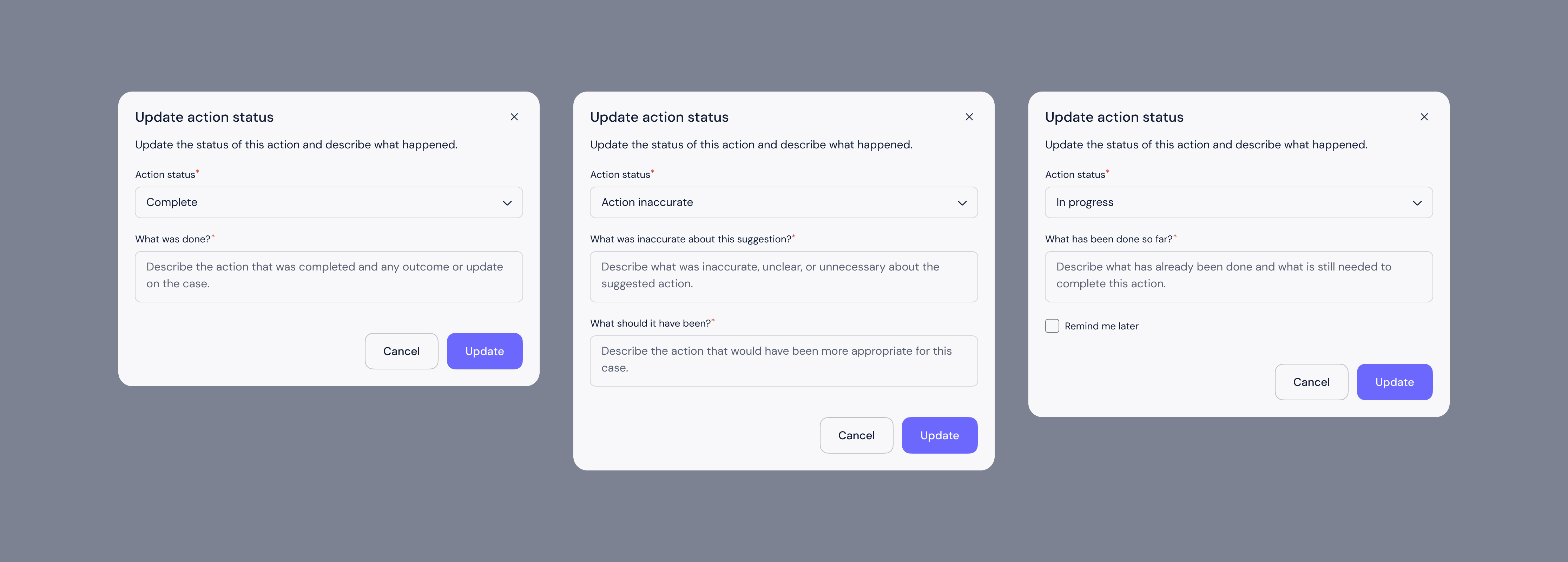
The paralegal logs what actually happened, or just confirms it when the system already recorded the action. Was the recommendation right? If not, what should it have been, and where does the case stand? That's the source of the truth the model learns from.
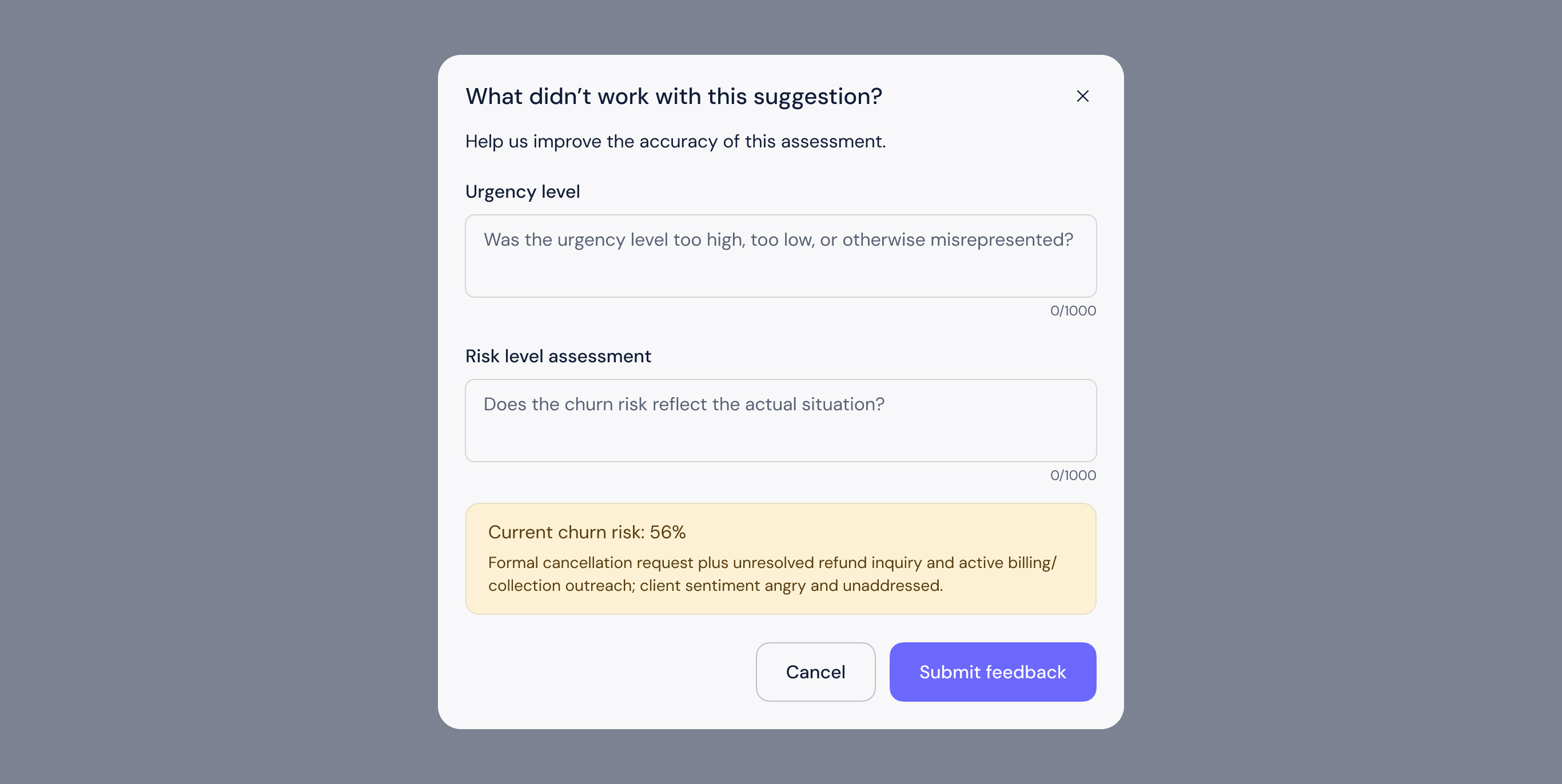
Direct annotations on the AI's judgment. The paralegal can tell us if the urgency was off, or if the churn risk doesn't match reality. It's how we learn where the model is wrong.
Same paralegal, different needs. Filtering by attorney preps the biweekly review (the AI team's original goal, now one click). With a spare hour, they can clear emails to clients who haven't scheduled CKC. With a few hours, they can send every waiver request at once.
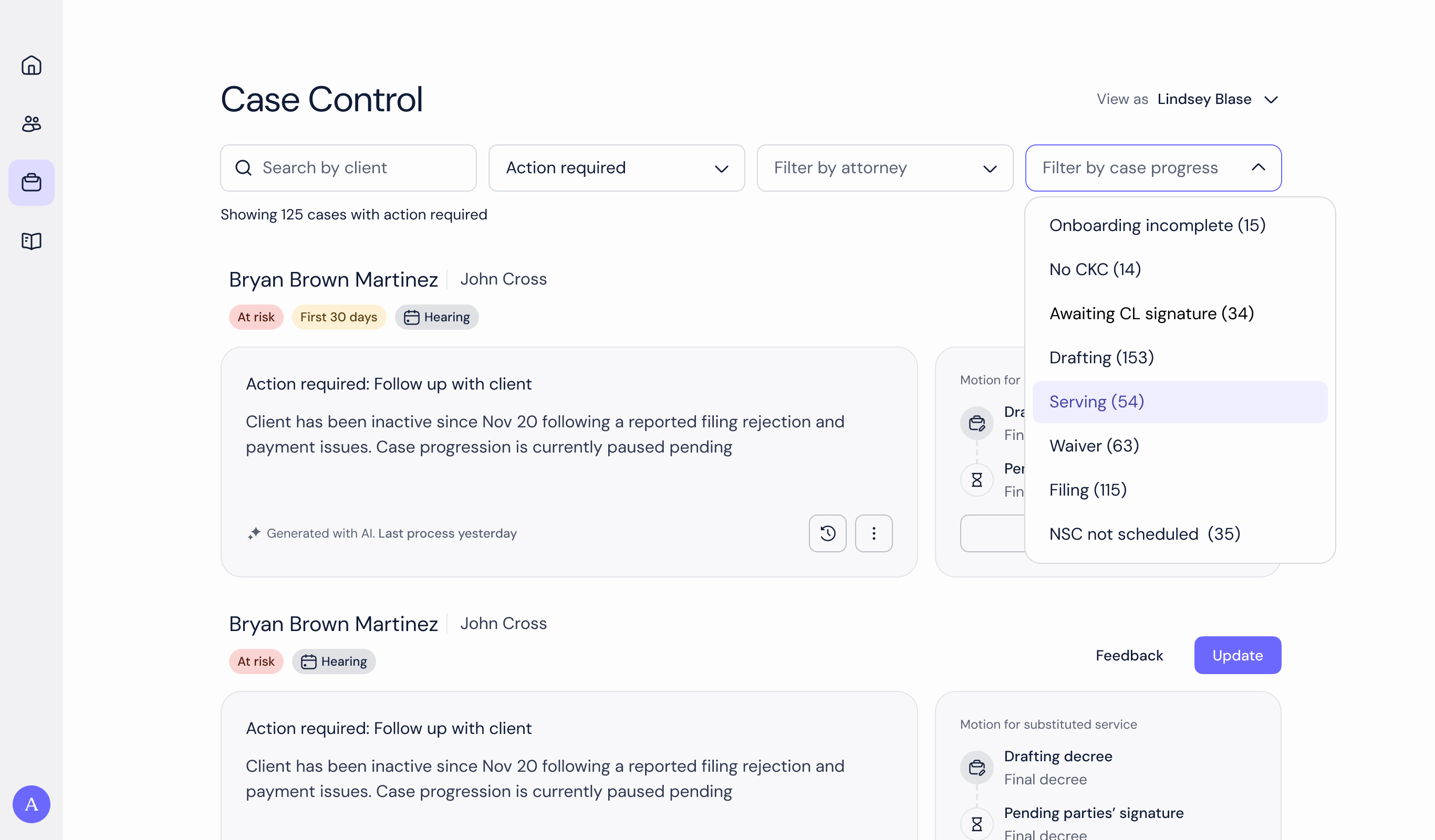
None of this was new capability. The AI could already see it all. The design focused what mattered, and turned a wall of data into a day's work that's clear and actionable.
The vision came first, not a feature list but a direction. It was cut into phases that could ship, be tested, and learned from, and it shifts as the learning comes in. Phase one is what's live today.
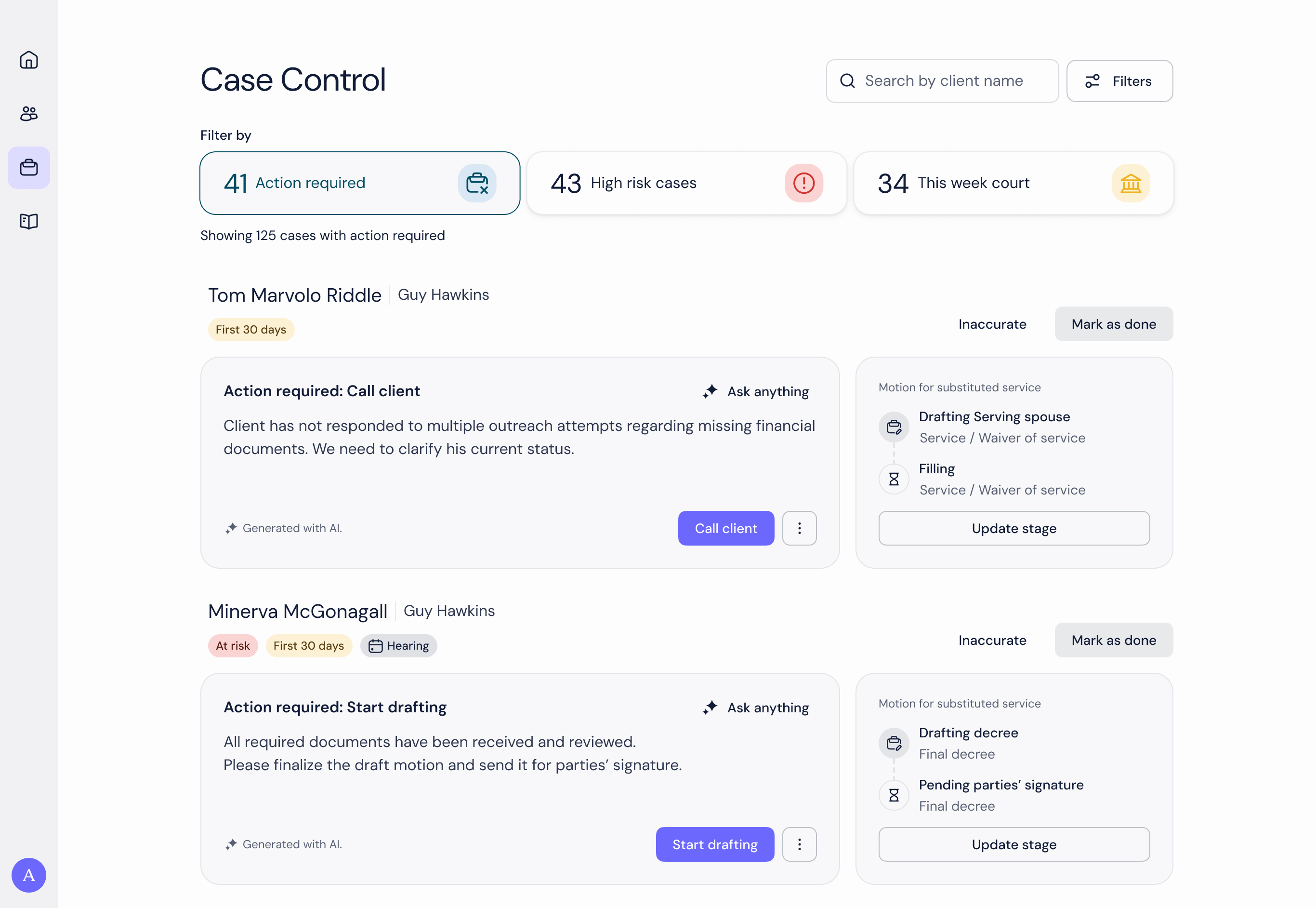
Quick filters show where the caseload stands at a glance, and the main button is already the next action, one click from recommendation to done.
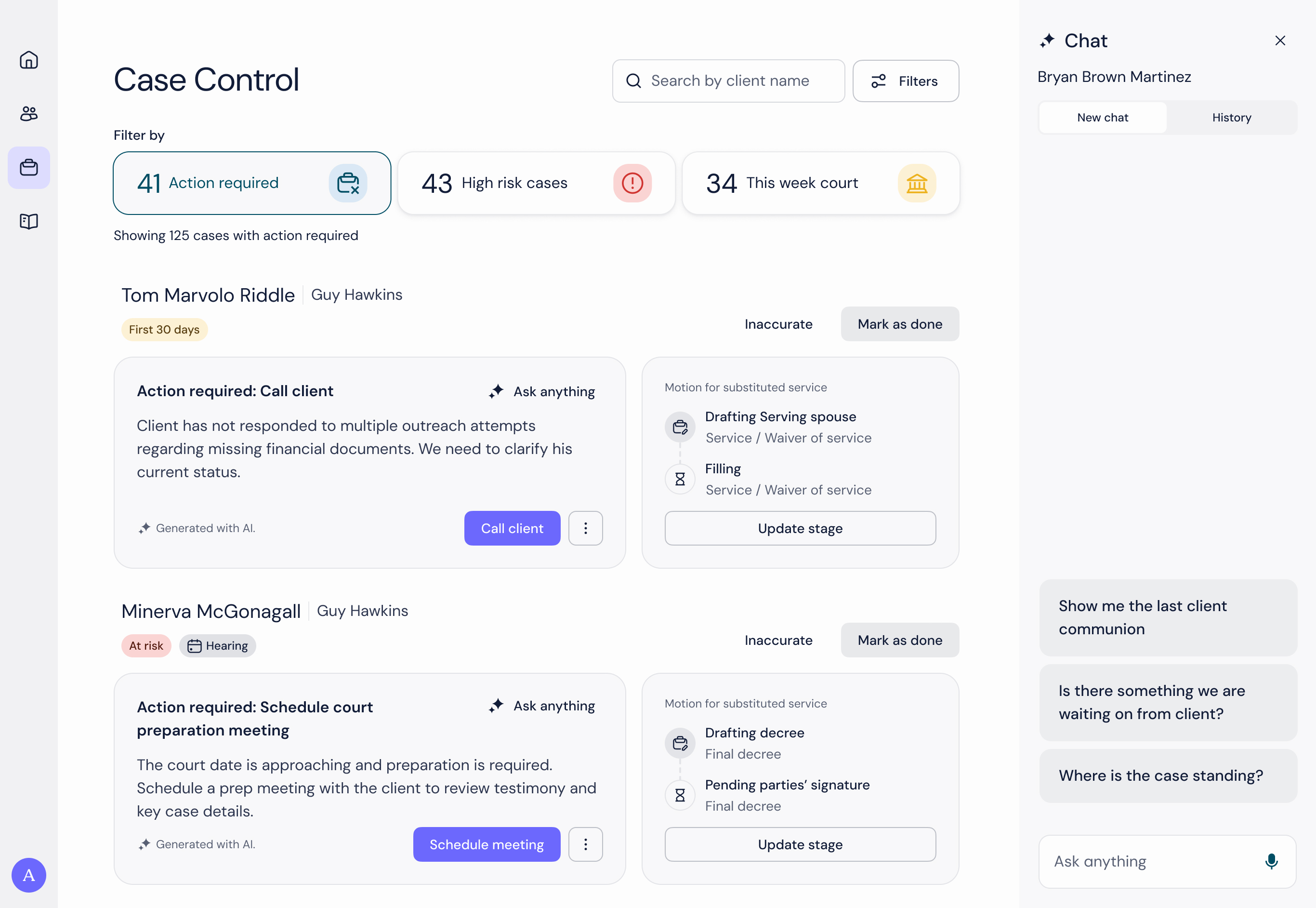
A per-case chat that pulls everything together. This was the piece I pushed to lead with, the place the system could learn the most. For now, it's still ahead.
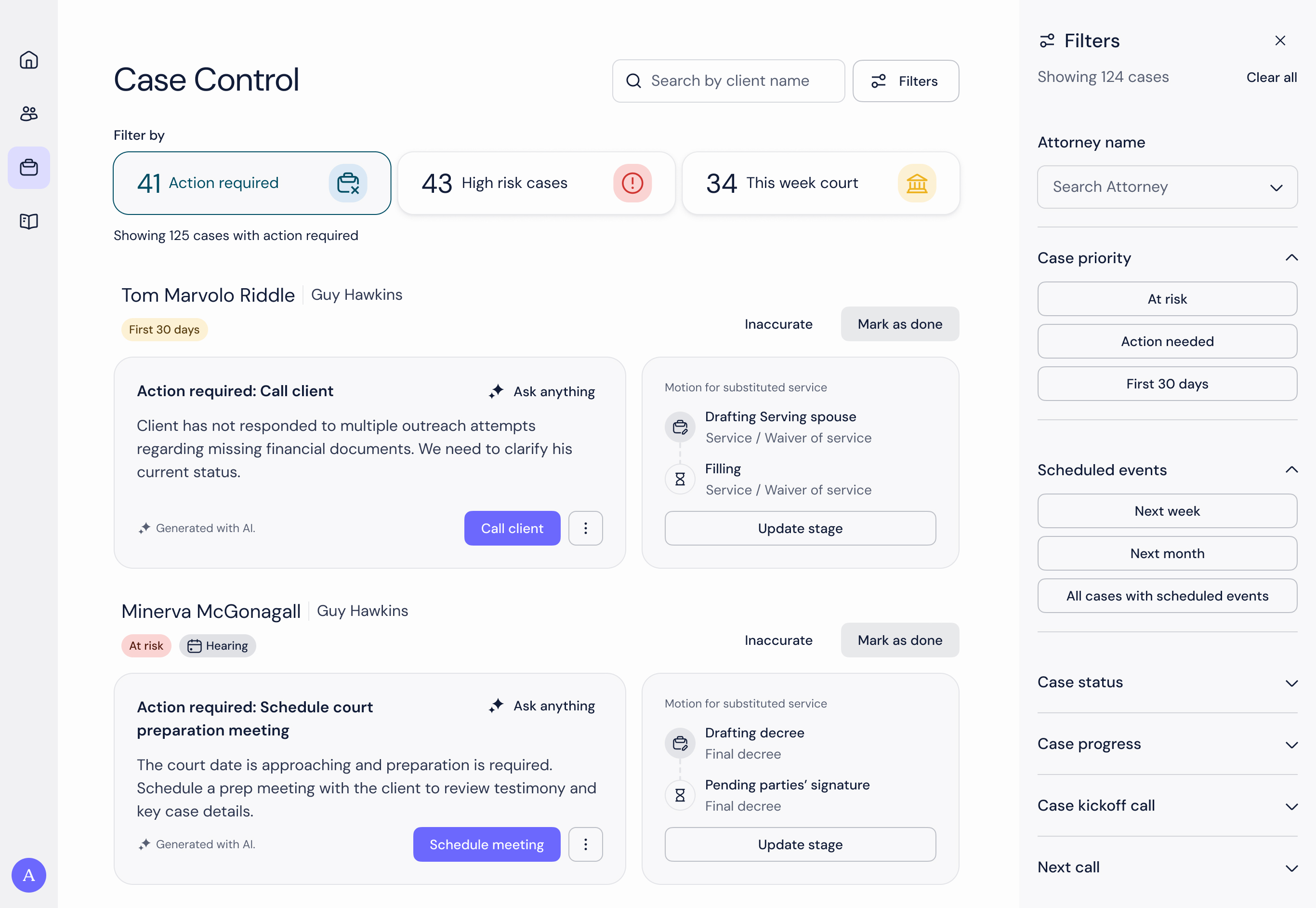
Filters for every way a paralegal works. The original vision was to ask to filter in plain language through a chat, but processing limits made that impossible for now. These filters give the flexibility needed, shaped by deep research into how the work actually happens.
The bigger plan was not just a better queue. Each phase builds on the last, from helping paralegals prioritize and scale, to learning from them, to automating the technical work, so they can focus where clients actually need a human.
The hard part this time was not getting the data. My job was to decide what to do with it. When the system can surface anything, that's the real work, not adding more, but shaping it into something usable.